Boondocking & Battery Life
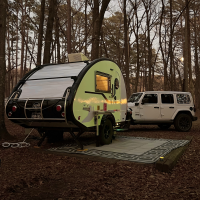
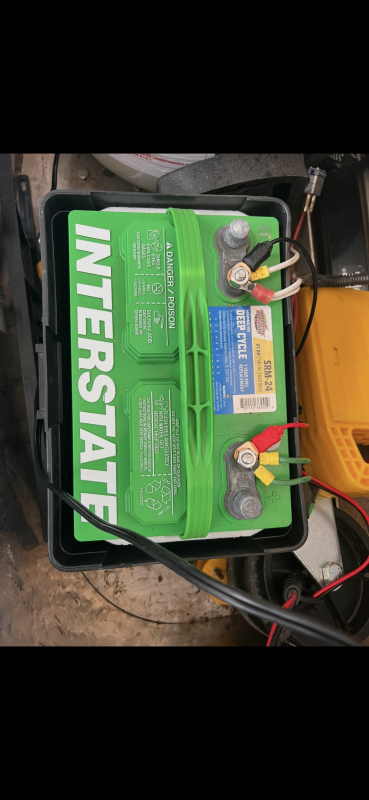
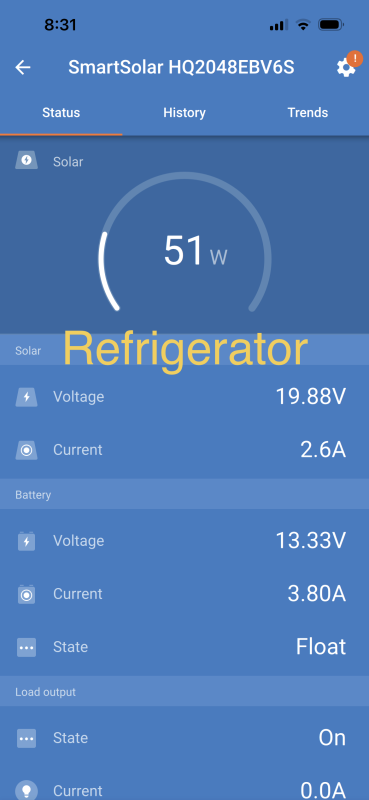
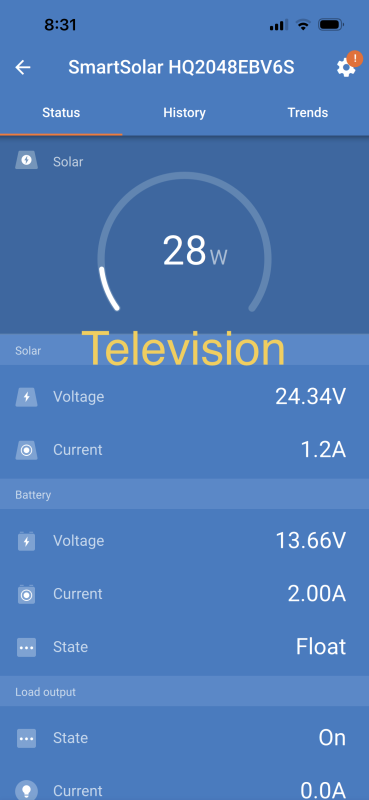
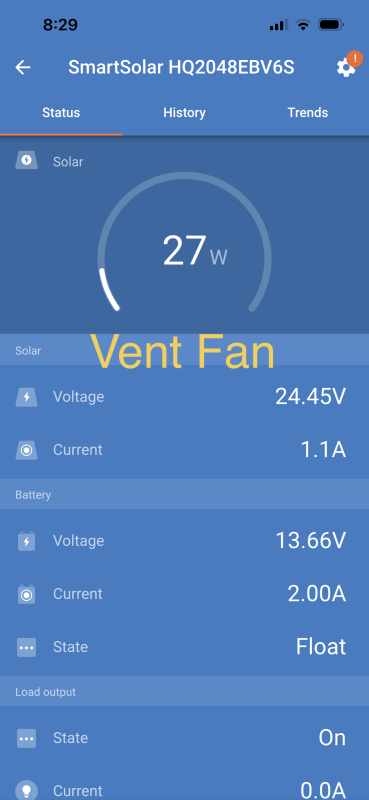
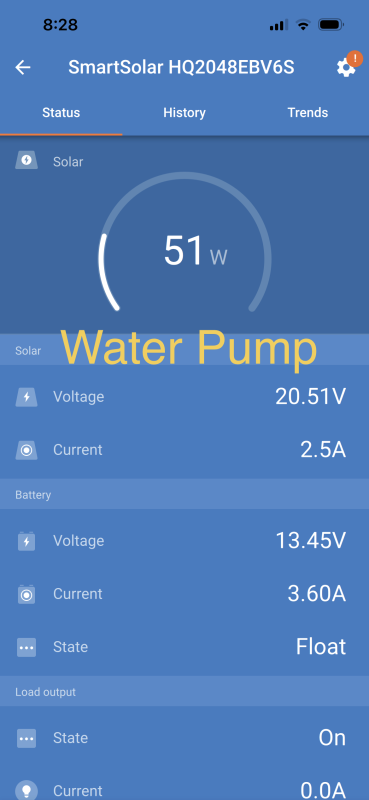
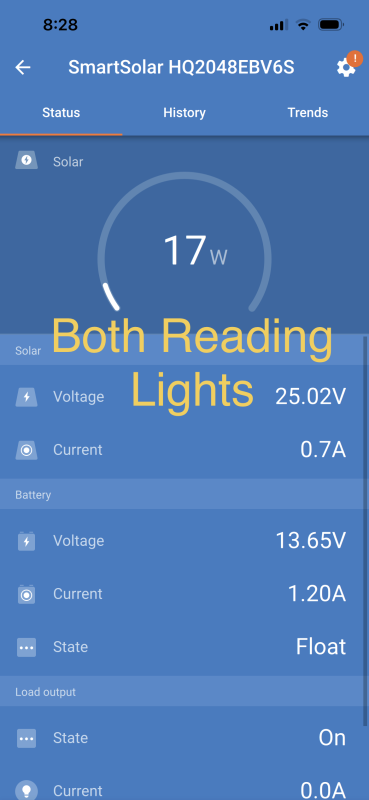
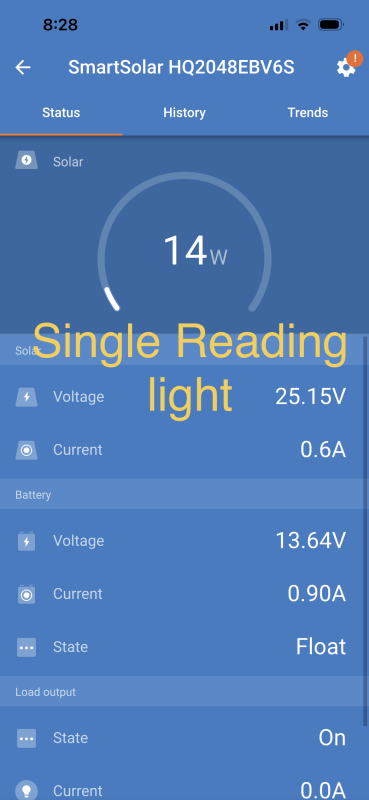
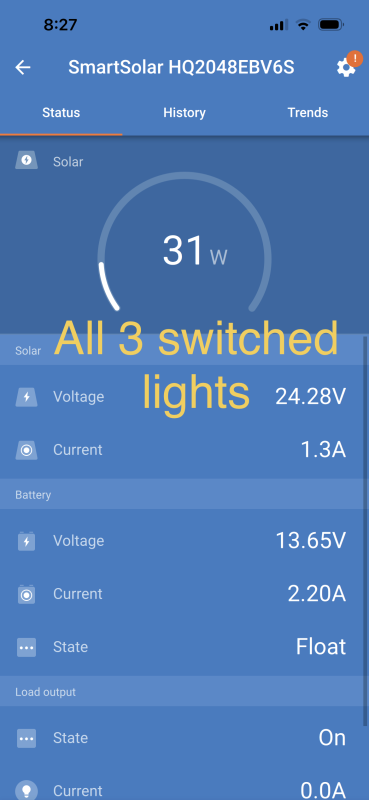
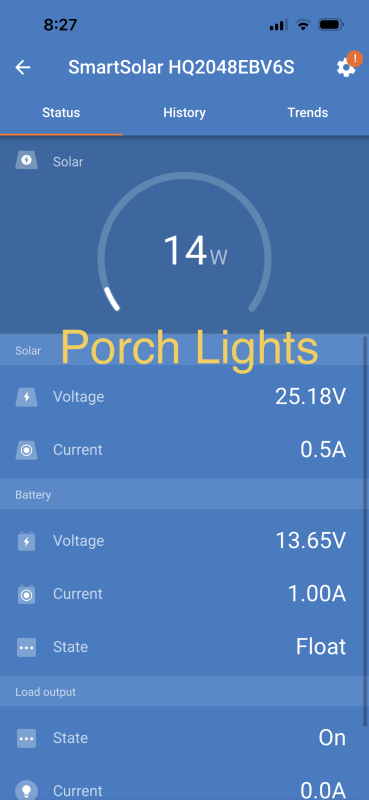
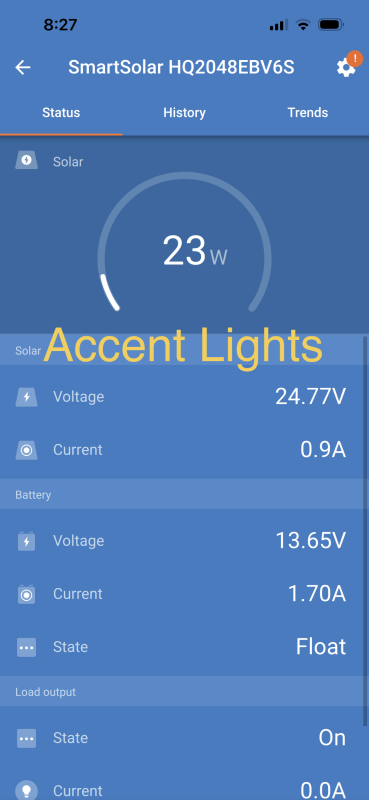
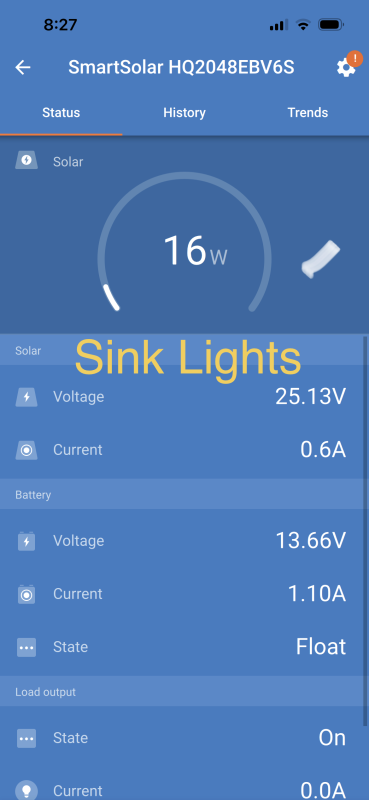
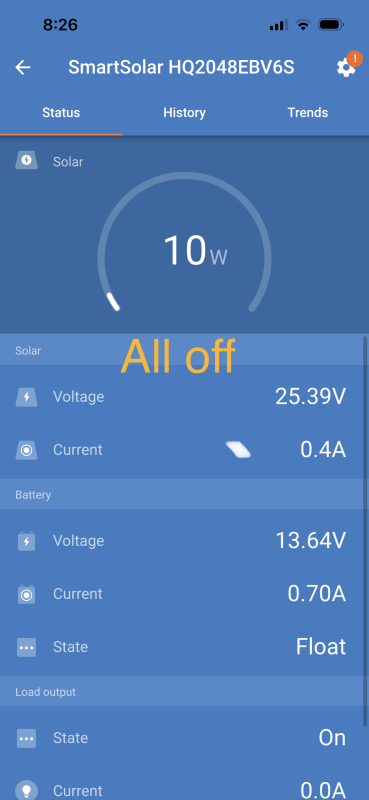
Hi All. Looking for feedback, advice, recomendations or critique. Spent the night in our 2023 320s Boondocks (Solar panel but not Lithium) this weekend. While we have stayed in locations without hookups before, we usually roll in and sleep, then are back out in the morning with little to no electric need. This time, I was looking to use the vent fan to move air through the day and the fridge on low to keep things cool but not cold. To my surprise, my battery was dead in about 2 hours after arriving. The battery is an Interstate SRM-24 and now on a Noco Genius while in storage. Everything pointed to it being fully charged. The drive was 2 hours to the camp and I did have the fridge on for it. This morning, after recharging the battery I took viltron screenshots of everything to determine where my draws are. Given the results in the pictures I attached, what would you expect the battery life to be for our trailer? I expect to do this trip multiple times in the coming months and would like to improve the results. Any recommendations on what I can do to upgrade the battery without major electrical change?
Comments
-
Lets get the easy part out of the way: the worst NuCamp battery combination was the "stock" 80 amp battery (with 40 amp hours "usable") and the two way fridge. Back when the fridges were the "3 way" fridge, where the fridge on propane "sipped" amp hours, that battery and a simple solar setup was pretty much easy to deal with. But: the 2 way fridges require more battery…or maybe a lot of good solar. The 2 way fridge can use 25-35 amp hours per day. The solar during the day can support the battery as the fridge cycles on and off…but then then sun goes down. The fridge will continue to draw power until the sun comes up the next morning. So now, the solar has to recharge the battery, and at the same time the fridge is running (it does cycle on and off). This constant race between solar input trying to recover the battery power used up overnight, while the fridge is still running, and the fan needs to be on….you get the idea. It is a constant race to try to keep the battery charged, and the 40 amp hours of "usable" power from your 80 amp hour battery is simply not enough.
Luckily for RV owners, lithium batteries showed up with much larger amp hour capacities, and portable solar became easier for everyone. 2 way fridges are much easier to manage with even a 100 amp hour lithium (about 90 amp hours available) and portable solar. There is much more of a cushion with 90 amp hours of battery capacity compared to 40.
For your battery: how old is it? If it is the original battery from 2022, it may simply have reached its end of life. The next thing to look over would be the History page of your solar controller. This will tell you what the status of your battery (roughly) when you pulled into your campsite and found your battery not working.
On your Victron readouts: The voltages you are showing in the screen shots are all "positive" values, so this appears to be the status of the battery while it was being charged. The battery voltage (13.6 or so) is also what any lead acid batteries will show while being charged. You are on the right track with getting readouts of power usage by using the Victron. The way to do this would be to turn the "Charger off" on the Settings page of the App. (It is just a toggle saying "Charger enabled". Just toggle that switch off.) With no charging coming in, turn everything off in the trailer (battery switch on). You will see in the "Current" section of the battery status a negative voltage number. That negative number is your "parasitic drain", the background power use that cannot be turned off: things like the carbon monoxide detector, the Jensens, etc. On my 2017, that draw is about -0.24, or about 1/4 of an amp per hour…about 6 amp hours per day. Now, with the solar off, and knowing the "base" draw of your trailer, you can turn those devices on one at a time and get a good handle of how much power the use. (You would subtract the base draw from each voltage number you get for each device).
Things to remember: your two way fridge (and I hope we are talking about a 2 way fridge!) will use more power when trying to cool down a warm fridge. It will cycle on and off when the compressor calls for cooling. So, your fridge will not always use the number you see when the compressor is running all the time. "Generally", your amp hour use for the fridge will be 50 percent of the number you see on your Victron, since the fridge might run 50 percent of the time. The pump will only draw power when the pump is actually pumping.
The other thing you will notice is the drop in the voltage number on your lead acid battery. I mentioned how the 13.6 voltage number indicates a lead acid battery being charged. Depending on the amount of draw from the battery as you test, you will see that battery voltage drop pretty dramatically. Both of these voltage readings , charged and being discharged, are "false capacity" readings of a lead acid battery. The only way to get a stable battery readout for a lead acid battery would be with the trailer battery switch off, and no power coming into the trailer.
So, good for you for working on this, it will be a very useful project. Tell us how old the battery is. Have a look at the history page for the day or so when you pulled into the campsite.
2017 Outback
Towed by 2014 Touareg TDi0 -
A few comments:
The Victron screen shows the amount of current going to the battery. With a fully charged battery that is pretty much equal to what the individual appliances consume. If the battery is charging at the same time the current is split between battery charging and powering the trailer at varying rates. A smart shunt or an amp clamp meter on the wire from the battery to the trailer would give exact readings.
Interstate doesn't make batteries they are a "marketing and distribution company" by their own admission. Quality has been at the lower end for years now and they've been living off their name. I have three unusable interstate batteries sitting in my shop right now all with one dead cell. The proper way to test a battery is with a capacity test which measures how much energy can be drawn from it until it reaches a set cutoff voltage. Voltage alone means nothing.
The default setting for most solar charge controllers incl. Victron is for AGM batteries. Regular lead-acid batteries do not get properly charged with this setting as voltages are slightly lower and it doesn't include an equalization phase. As I mentioned recently in another thread a friend had a pair of regular 12V batteries go bad in 18 months despite the trailer getting plenty of sun onto the solar panels because the setting was wrong.
LiFePo batteries have gotten dirt cheap, cheaper than lead-acid batteries in fact. Cheapest one on Amazon is $89 for 100Ah. Now I wouldn't recommend one in that price range but there are a couple of widely used brands (not Battleborn !!!) that can be had for around $200. Will Prowse's DIY solar channel on YT has lots of battery reviews. LiFePo batteries are pretty much a drop in just make sure it physically fits into the mounting area. The converter in the trailer might not fully charge the battery (depending on type of converter) but the battery can be topped off with an external charger (I think Noco has a LiFePo setting) or properly configured solar charging.
1 -
thanks guys. Going to take a look back at the history and do some digging on YT reviews. The battery is about a year and a half old.
0 -
I agree with Grumpy-G….most "deep cycle" lead acid batteries these days are not the best, but they have been installed in Nucamp trailers for quite a while. In my 2017, the Interstate lasted about 5 years. If you are really careful with them, not letting them discharge too low too many times, they can last for a decent amount of time. It used to be a "group 24" sized battery (which yours is) was rated at 80 amp hours. The Interstate now still claims that capacity, but many of the "auto store" deep cycle batteries are now only rated around 65 amp hours. They are cheap, though, so there is that. Duracell seems to have a decent reputation, and they still have the 80 amp hour capacity. Like everything else in these sorts of things, the warranty and how the company backs them up is the key.
Towed by 2014 Touareg TDi0

 2017 Outback
Categories
- All Categories
- 11 Cirrus Truck Campers
- 127 Dutchman and Vintage TaB Archives
- 3 Forum Rules
- 3 nüCamp & Forum Contacts
- 967 Air Conditioning & Refrigeration
- 2.7K Battery/Electrical & Solar
- 1.2K Camping & Travel
- 145 Events & News
- 220 Factory Comments
- 23 "FOR SALE" - New/Used Trailers
- 12 “FOR SALE" - Camping & Trailer Gear
- 2.4K Heating/Plumbing & Winterizing
- 142 Help - Computer & System
- 924 Introductions
- 408 Looking to purchase a trailer?
- 2.1K Modifications & Upgrades
- 1.4K Products and Accessories
- 419 Service/Maintenance & Recall Notices
- 37 Solo Travelers Hints & Tips
- 1 T@G Forum
- 77 Teardrop Groups & Links
- 78 Testimonials
- 922 Tips & Tricks
- 1.5K Trailer & Towing
- 27 Owners Manuals/PDF Files/Videos & Resources
- 56 üCamp Rally - News & Information