Trip to Elkhart to See Truma
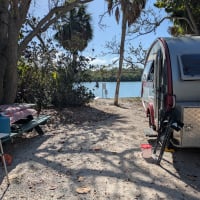
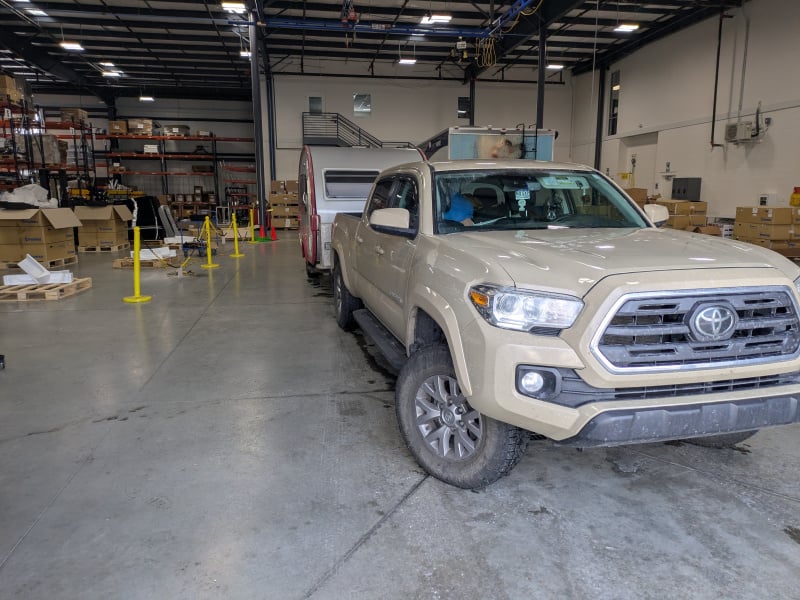
Below is an account of my experience with having the good folks at Truma service my Alde unit. I took my 2018 T@b 320 to their service center in Elkhart and I thought this may be helpful to folks here.
I just acquired the camper this fall and the previous owner let me know that the propane heat was not working. I was also not sure when the last glycol flush had been done. So my goals for the work included having the system fully flushed with the newest glycol added, having the propane heat looked at, any misc items that needed to be addressed, and generally learning more about the system. I can say that all of those goals were achieved and I was very happy with their service and expertise.
As far as accomodations I had booked an electric site at the RV Hall of Fame Museum. However, when I got there I was informed that the electric sites were closed up sometime in November. They also said I could stay the night if I did not need electric. However, since I was having issues with propane heat and the fact that it would get down to 4 degrees fahrenheit overnight I skipped it and grabbed a motel. There are lots of motel options 3-5 miles from the shop. Also, being an RV town there are quite a few campgrounds in the general area when in season. A bonus option is that Truma also has 2 electric spots with in-season water that you can reserve the night before your appointment.
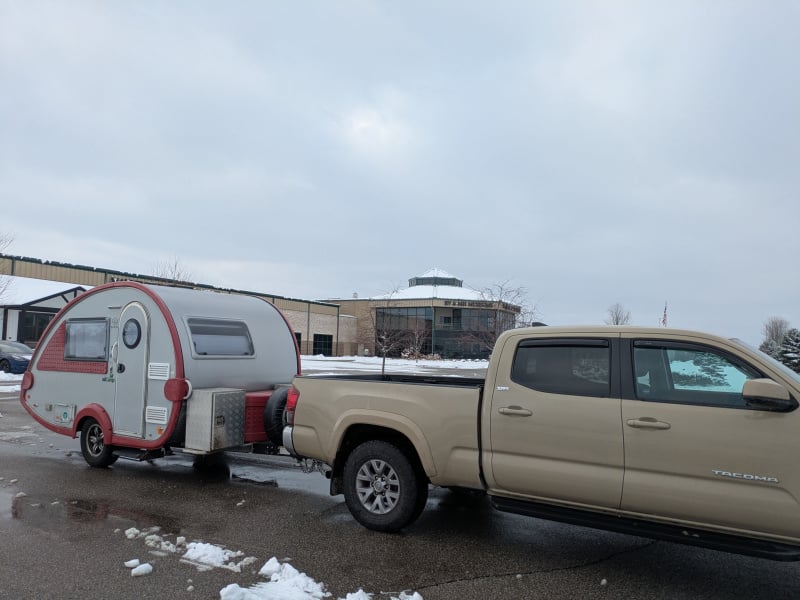
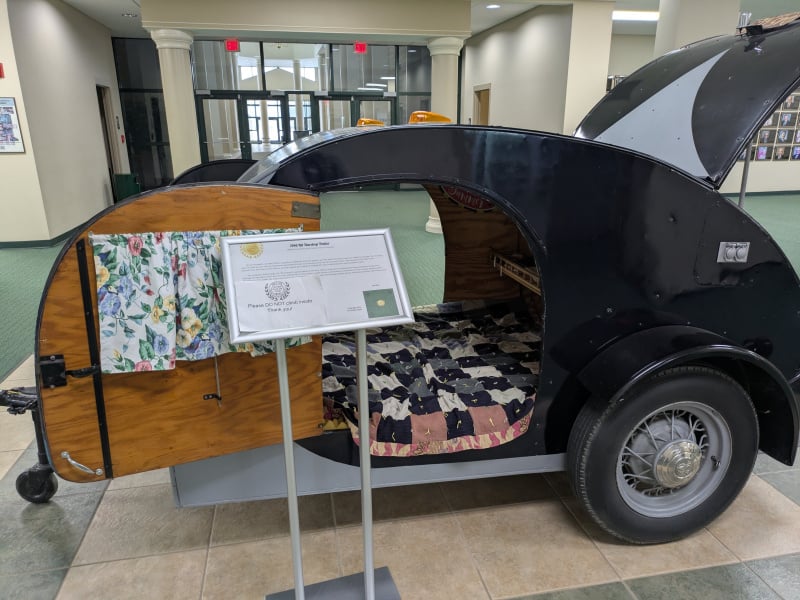
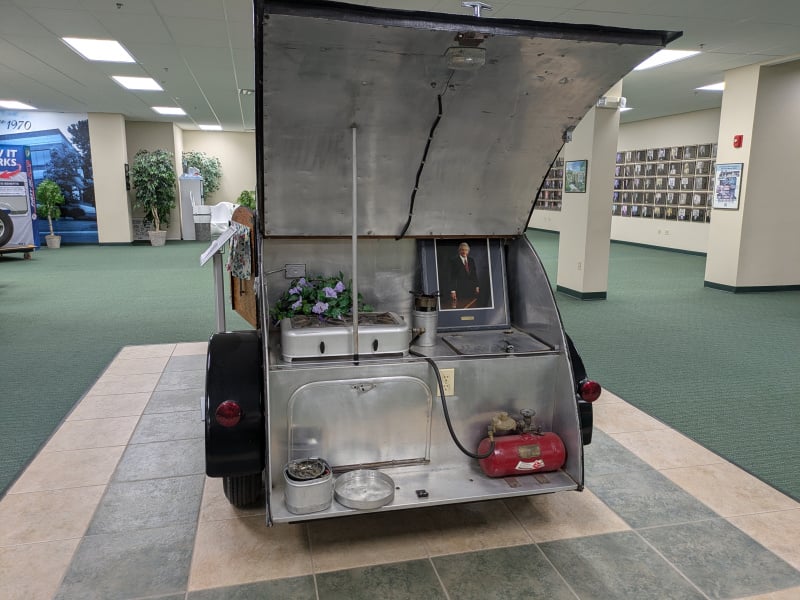
I should also mention that Truma has a Florida service center. The Truma folks said that it's their quiet time in Elkhart now but that the Florida one is starting to get really busy. This flip flops in the spring.
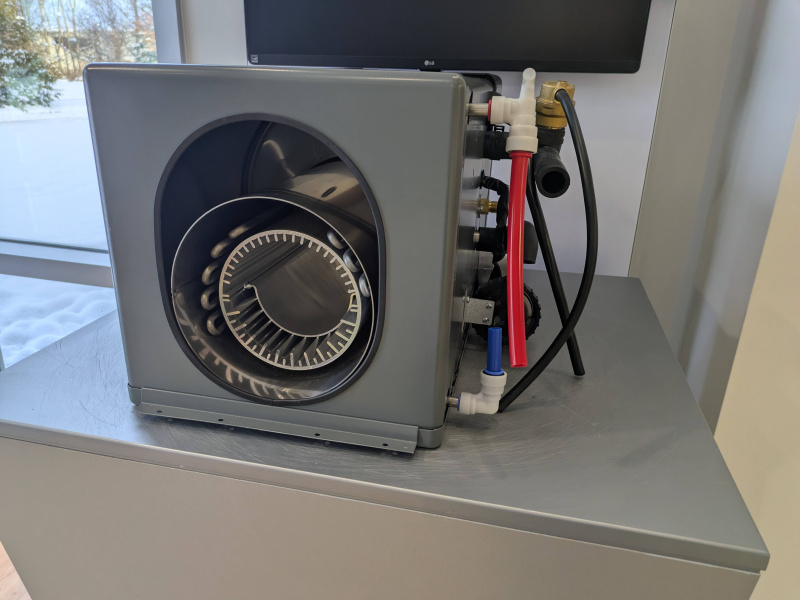
The actual appointment was about 3 hours. The work was all done indoors in their climate controlled warehouse. They had me sit out in the waiting area which also doubles as an area with displays of all of their products. The display units are interesting in that they are cutaway models and show all of the chambers within the Alde. This became very helpful because my service tech was giving me updates as he went along. He would come in from the warehouse and use the cutaway display model to explain how the system works.
One of the first things the service tech checked was the propane situation. He isolated my issue by connecting his own propane bottle with a hose directly the Alde. It fired right up and showed no issues. He said all I'll need is to order a regulator and replace the one on the front of the T@b. He recommended a high flow, double chamber unit readily available on Amazon.
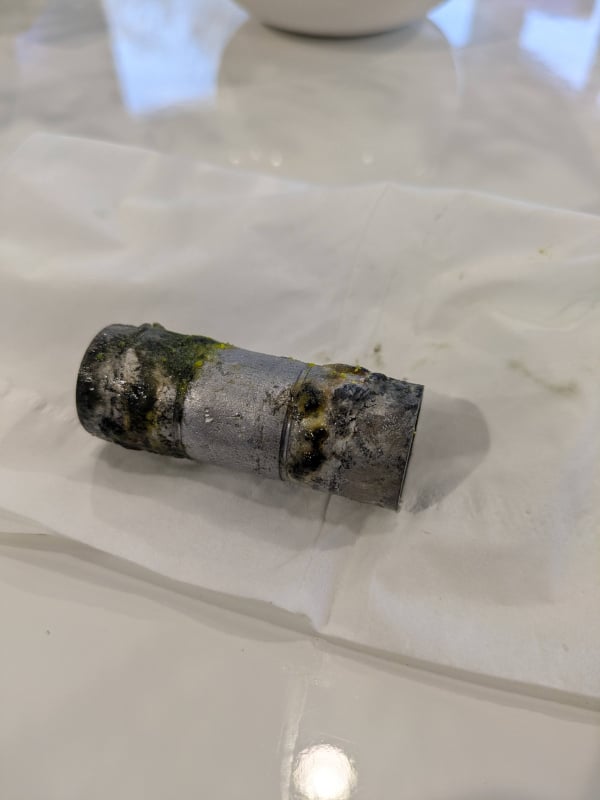
Next came the flush. He did not think it had been flushed in quite awhile. The tale tell sign was that 3 of my aluminum thru-pipes were corroded and beginning to swell. 1 of the thu-pipes is actually a check flow valve and was pretty buggered up. The other 2 simply connect 2 of the black heating tubes. I had those all replaced and the cost and labor was nominal but was in addition to the cost of the flush. The other problem that he noted was that there was a decent amount of sediment in the glycol. He said that the method he used was to flush lots of water through the system using several of the openings and attempting to get as much of it out as possible. After that he was able to start pumping in the new glycol and replacing the water.
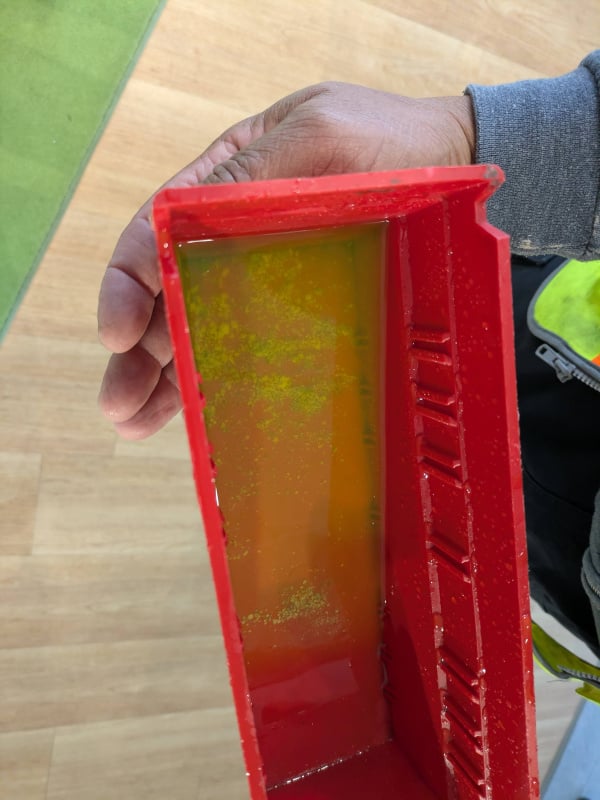
As far as purchasing a bottle of glycol the tech gave me a small bottle to use to top off the level (I believe it's about 8 oz). He said there would be some small air bubbles for a while that will work their way out and these would cause the level to go down a bit. However, after a while it should not use up anymore glycol and that there's no reason to buy a bigger gallon jug.
Of course it can't be said enough that one of the big benefits of having the manufacturer service the unit is all of the helpful tips. For example, I did not know that the big black tubes are supposed to not have anything on or around them. The tubes actually put off heat and assist in warming up the spaces they run through. It was also helpful to see a cutaway version of the unit. The inner chamber is heated up by the burner, the middle one is where the glycol circulates, and the outer area is for the water. He did emphasize that if you're using electric to first start it with propane to get it up to temp, then switch to electric to maintain it. Along those lines, mine has 2 electric "levels". He said there are 2 heating elements and to always run both.
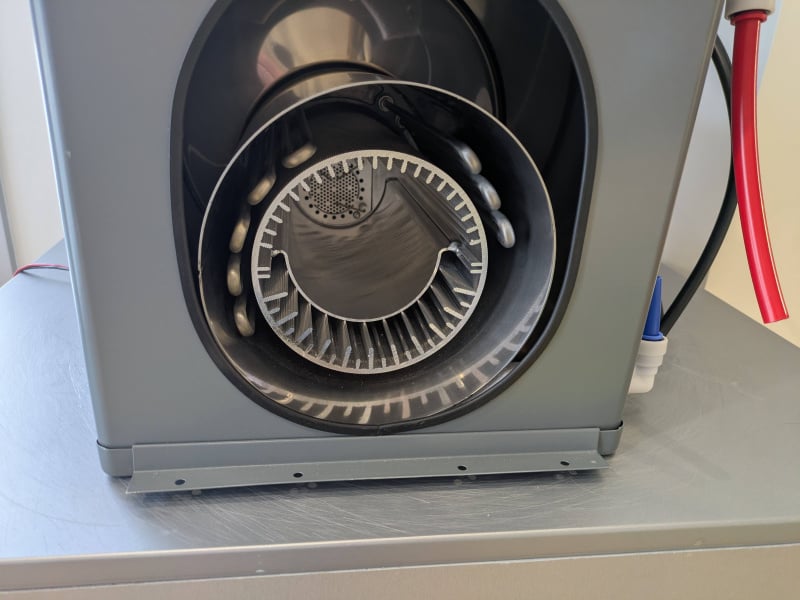
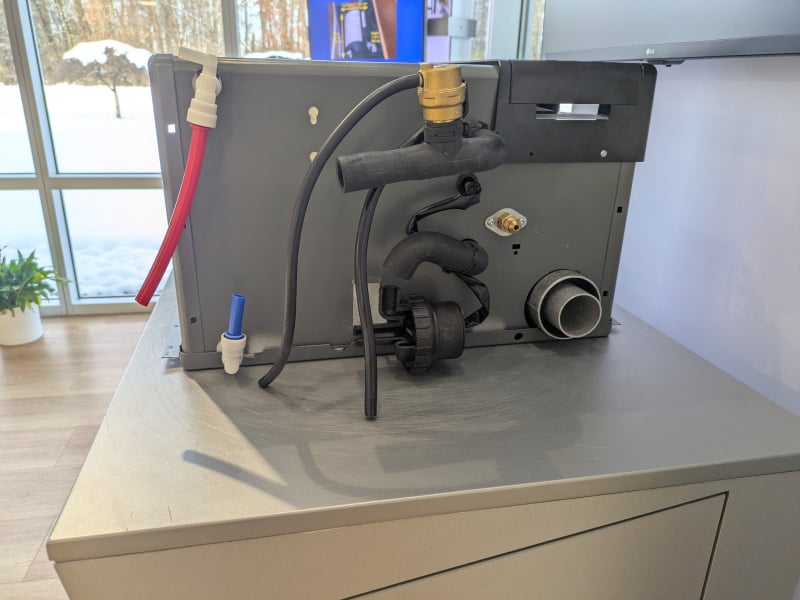
Some other tips he shared was to always keep the yellow drain valve open when it's winterized. The thought there was that there is always a chance someone may operate the water pump and potentially pump some water into the unit, which may freeze up and cause issues. He also showed me that the lowest spot is where the cold water (blue) pipe goes in. As far as using the propane in the winter, he recommended using a propane tank warmer.
The last and most important recommendation was to come back in 3 years to have the glycol flushed again. 3 years being for your average part-time occasional camper, 2 years for full-time or more serious folks.
So in summary, I can't recommend enough to contact Truma and have these folks go through these excellent heaters. They are great folks to work with and you will learn a lot.
Comments
-
Great report, and great photos.And, even a Truma tech, at a Truma Service Center, can get the time between the glycol changes wrong, or slightly incorrect. Alde has always said (and Nucamp, and the Alde manuals) that the glycol change cycle should be two years. And, the usage has nothing to do with this. (Of course, many owners do not religiously change their glycol on the two year cycle).You will find this type of erratic information about the glycol to be pretty common.Thanks again for the information and the pictures!
2017 Outback
Towed by 2014 Touareg TDi1 -
Absolutely! Glad to contribute.YOLOCamper, 2018 T@b320 S, 2019 T@co0
-
Hi @YoloCamper ,
Thank you for the post.
Just curious, did you chat with the rep. the reason for the corrosion just on the stub ends or through connectors (and not other places in the system)?
Is it lack of fluid flush every 2 years, lack of coating compound on the stub ends, poor clamping, etc. fluid type (yellow or grene/blue). TY2025 360 CS
2021 TAB 320 BD (w/new owner having fun)
2021 Jeep Grand Cherokee
Southern Maryland0 -
Very helpful, and gives me an option for reliable service when I need it for my Alde. So far in 7 years since manufacture date no issues.
It is well worth the drive for me to get it done right.
2019 T@B 400 Boondock Lite towed by 2016 5.7L Toyota Tundra
1 -
Another thing I found strange. I hope he mentioned that you should be sure you're connected to a minimum of 20 amp service, preferably 30 amps before using both elements. There are reasons why the system isn't set up to always use both elements.YoloCamper said:... He said there are 2 heating elements and to always run both.
Stockton, New Jersey
2020 nuCamp T@B 320S * Jeep Wrangler
60,865 camping miles through the end of 20251 -
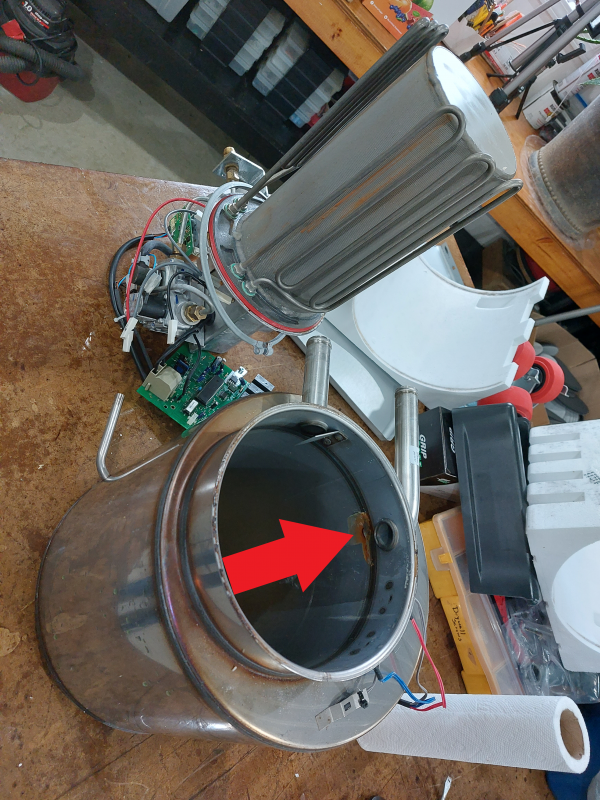
It's interesting that one of the heating elements looks larger than the other. This is different from other cutaway I recall seeing.
I wonder if that's a European model. Those have two different sized elements compared to US models.2015 T@B Max S (320)
2015 Nissan Frontier SV V6 4x41 -
Good eye @Scott. Everything I've seen has two 1000W elements. My guess is that the furnace in @YoloCampe's post is not what we have in our T@B's. Here's a picture that I believe came from someone here who had to do weld repairs on their Alde.
Stockton, New Jersey
2020 nuCamp T@B 320S * Jeep Wrangler
60,865 camping miles through the end of 20251 -
What I heard was that it was just a lack of having it flushed and replaced in a timely fashion. The only other part that he did not replace but said to do it on the next flush was the hot/cold mixer valve. That part has been updated since my model. It had some corrosion showing but he thought it would be fine for this round.Yoshi_TAB said:Hi @YoloCamper ,
Thank you for the post.
Just curious, did you chat with the rep. the reason for the corrosion just on the stub ends or through connectors (and not other places in the system)?
Is it lack of fluid flush every 2 years, lack of coating compound on the stub ends, poor clamping, etc. fluid type (yellow or grene/blue). TYYOLOCamper, 2018 T@b320 S, 2019 T@co0 -
It's possible I did not hear him correctly on this point because the way you state it is also what I heard elsewhere. I'll have to scour the manual and this excellent forum to be sure.AnOldUR said:
Another thing I found strange. I hope he mentioned that you should be sure you're connected to a minimum of 20 amp service, preferably 30 amps before using both elements. There are reasons why the system isn't set up to always use both elements.YoloCamper said:... He said there are 2 heating elements and to always run both.
YOLOCamper, 2018 T@b320 S, 2019 T@co0 -
@YoloCamper each Alde "element" draws 7.9 amps. On your 2018, the electric controls on the panel have a "1KW" and a "2KW" setting. So, on the 1KW setting you are drawing 7.9 amps on shore power, and on the 2KW setting you are drawing 15.8 amps. This is where the discussion comes to the thought that at least a 20 amp circuit would be needed if using the Alde on thee 2KW setting. This discussion mostly comes up when owners are on a "household" circuit at their homes, where a 15 or 20 amp circuit would be common. At a campground, in most cases, there are 30 amp circuits for shore power.As far as the Alde corrosion issues go, this group has extensive experience with the what and why the corrosion happened. Generally, the thought is that poor construction practices, bad clamping, etc, led to glycol being trapped under the hoses that attach to various aluminum components. Alde and NuCamp has never admitted this happened the way we think.Towed by 2014 Touareg TDi1

 2017 Outback



Categories
- All Categories
- 12 Cirrus Truck Campers
- 128 Dutchman and Vintage TaB Archives
- 3 Forum Rules
- 3 nüCamp & Forum Contacts
- 969 Air Conditioning & Refrigeration
- 2.7K Battery/Electrical & Solar
- 1.2K Camping & Travel
- 145 Events & News
- 220 Factory Comments
- 26 "FOR SALE" - New/Used Trailers
- 15 “FOR SALE" - Camping & Trailer Gear
- 2.4K Heating/Plumbing & Winterizing
- 138 Help - Computer & System
- 925 Introductions
- 408 Looking to purchase a trailer?
- 2.2K Modifications & Upgrades
- 1.4K Products and Accessories
- 422 Service/Maintenance & Recall Notices
- 37 Solo Travelers Hints & Tips
- 1 T@G Forum
- 78 Teardrop Groups & Links
- 78 Testimonials
- 922 Tips & Tricks
- 1.5K Trailer & Towing
- 27 Owners Manuals/PDF Files/Videos & Resources
- 56 üCamp Rally - News & Information