Power Station Build

AnOldUR
Member Posts: 1,759
I'll have to eat some crow here. When forum or Facebook threads come up from members using power stations, I'll chime in saying that an onboard battery upgrade is a better option if you don't need the power station for uses outside of camping. Now here I am building a power station. 
This started because I upgraded our onboard 100Ah batteries with newer, more compact 300Ah. That left me with two LiFePO4's with a lot of life in them. We carry a 12V compressor fridge in the back of our Wrangler and keep it set as a freezer. Works great for keeping frozen foods for longer trips along with making ice cubes for drinks. I've used different ways of powering it, but wasn't satisfied with them. Repurposing the old batteries made sense.
We won't be able to give the system a good test until we head out for our first longer trip at the beginning of May, but I have my hopes up that this will be worth the time and cost of the components used. We had the little 375W inverter that we used for blowing up an air mattress when tent camping. It probably won't get much use mounted in this build, but we'll see. The solar controller was left over from when I upgraded our rooftop panel and needed a new larger controller for it. I also already had the NOCO charger. Everything that I needed to purchase came to about $220. I'm not sure about the overall cost benefit, but it was a fun project that should be useful.
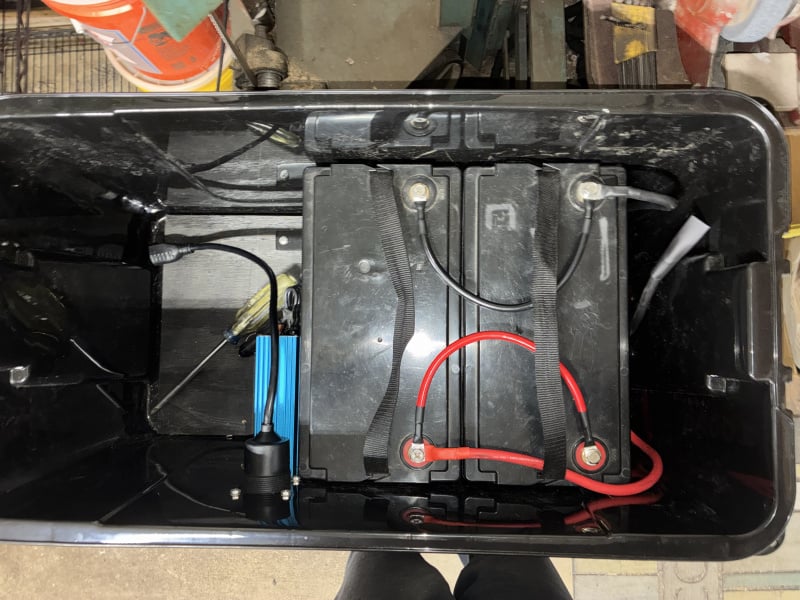
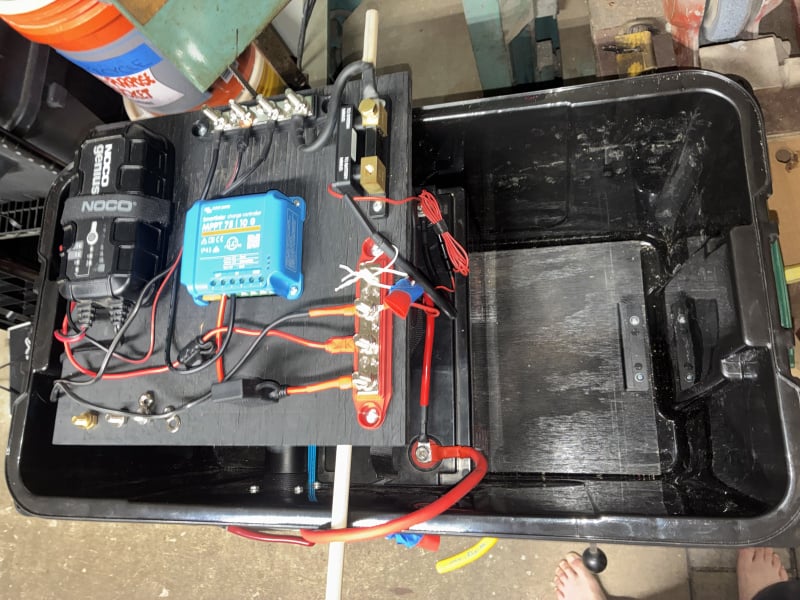
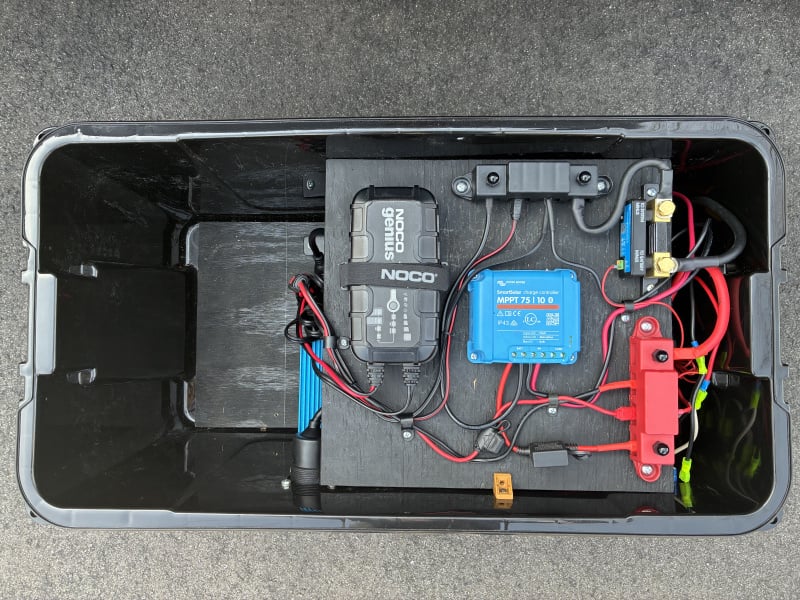
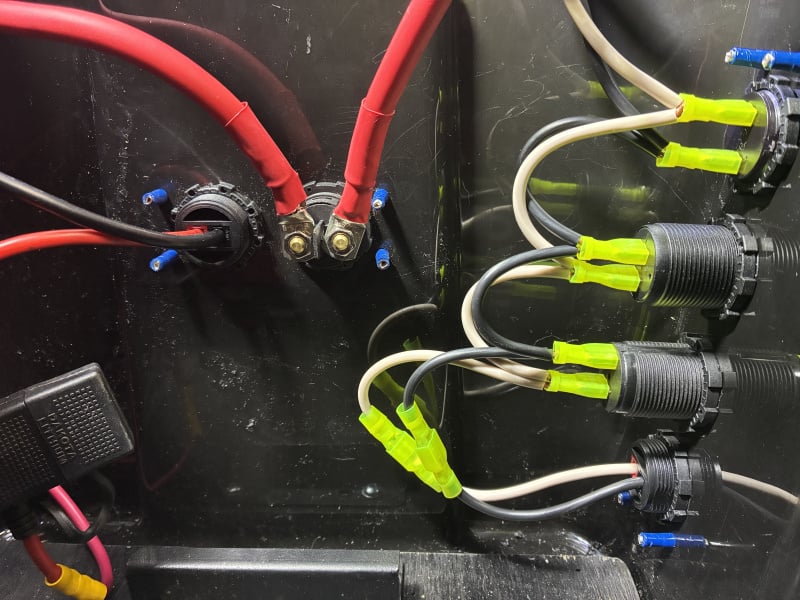
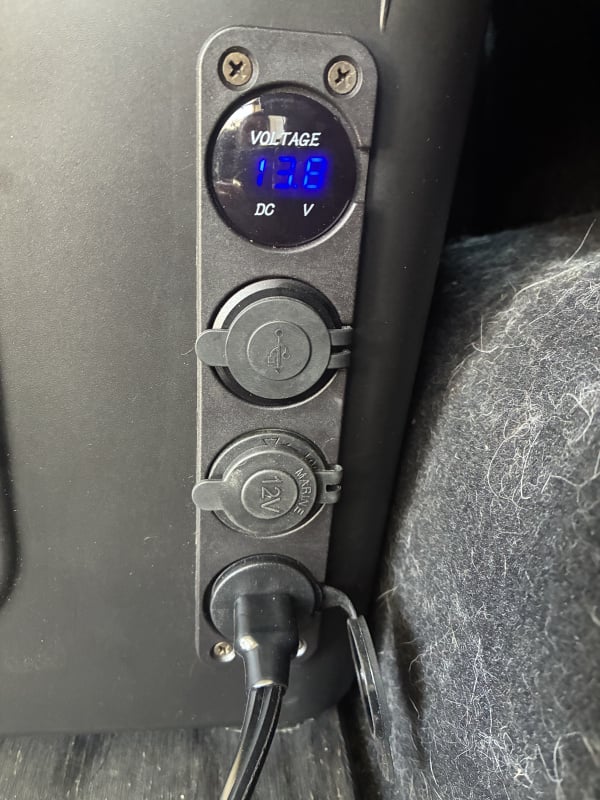
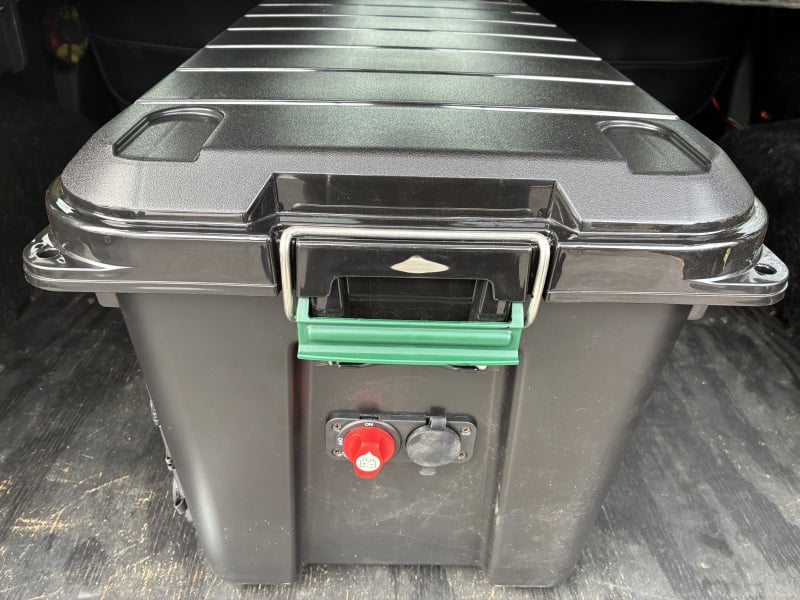
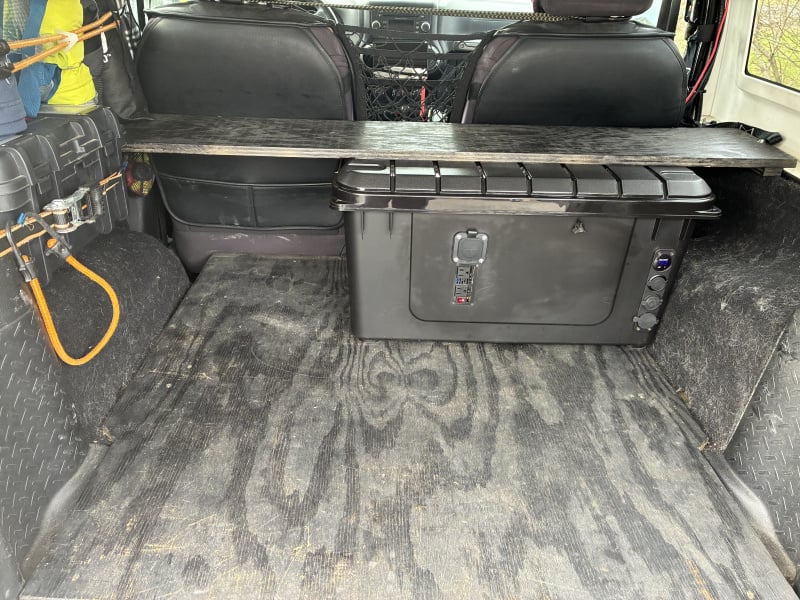
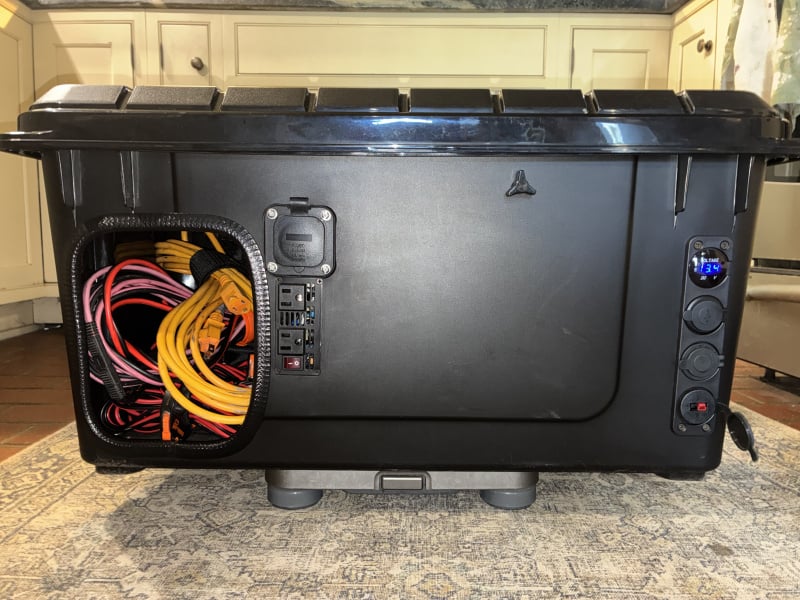
2 x 120V AC Outlets
120V Power Inlet (for charger)
12V Volt Meter
Type C and QC 3.0 USB Sockets
Cigarette Type Port
Anderson 45 amp Port (output)
Anderson 45 amp Port (solar input)
Disconnect Switch
This started because I upgraded our onboard 100Ah batteries with newer, more compact 300Ah. That left me with two LiFePO4's with a lot of life in them. We carry a 12V compressor fridge in the back of our Wrangler and keep it set as a freezer. Works great for keeping frozen foods for longer trips along with making ice cubes for drinks. I've used different ways of powering it, but wasn't satisfied with them. Repurposing the old batteries made sense.
We won't be able to give the system a good test until we head out for our first longer trip at the beginning of May, but I have my hopes up that this will be worth the time and cost of the components used. We had the little 375W inverter that we used for blowing up an air mattress when tent camping. It probably won't get much use mounted in this build, but we'll see. The solar controller was left over from when I upgraded our rooftop panel and needed a new larger controller for it. I also already had the NOCO charger. Everything that I needed to purchase came to about $220. I'm not sure about the overall cost benefit, but it was a fun project that should be useful.
2 x 120V AC Outlets
120V Power Inlet (for charger)
12V Volt Meter
Type C and QC 3.0 USB Sockets
Cigarette Type Port
Anderson 45 amp Port (output)
Anderson 45 amp Port (solar input)
Disconnect Switch
Stockton, New Jersey
2020 nuCamp T@B 320S * Jeep Wrangler
60,865 camping miles through the end of 2025
5
Comments
-
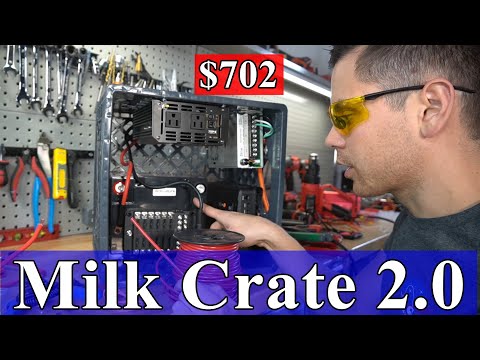
I am also guilty of saying all the same things about power stations! When my propane fridge died a couple of years ago, I used my original lead acid trailer battery to support the 12V fridge I now carry. It was nice to get the 12V fridge out of the trailer for a little legroom, and the extra battery was useful for that. My portable panels could recharge it easily. When the old lead acid finally showed signs of giving up a year ago, I purchased a 50 amp hour lithium battery. Worked fine.Then I stumbled across the Will Prowse "milk crate" power station builds. He laid out the plan in detail, so I ordered the various parts and worked one up. Not at "finished" at AnoldUr's here, but it works quite well. The larger inverter handles my laptop that I carry better than my smaller inverters I use inside the trailer,and I can charge it on shore power or solar. It was a nice project for me, just one more step of my Tab Education.Here is the Will Prowse video for anyone who might like to jump in.
2017 Outback
Towed by 2014 Touareg TDi3 -
Nice video @pthomas745. I'm a Will Prowse fan, but I hadn't seen this one.
If I find myself needing a larger inverter, upgrading won't be too difficult. I have a 2000W Renogy inverter in our T@B, so unless I find I'm using this power station away from the trailer, my old 375W inverter will offer some cheap extra convenience.
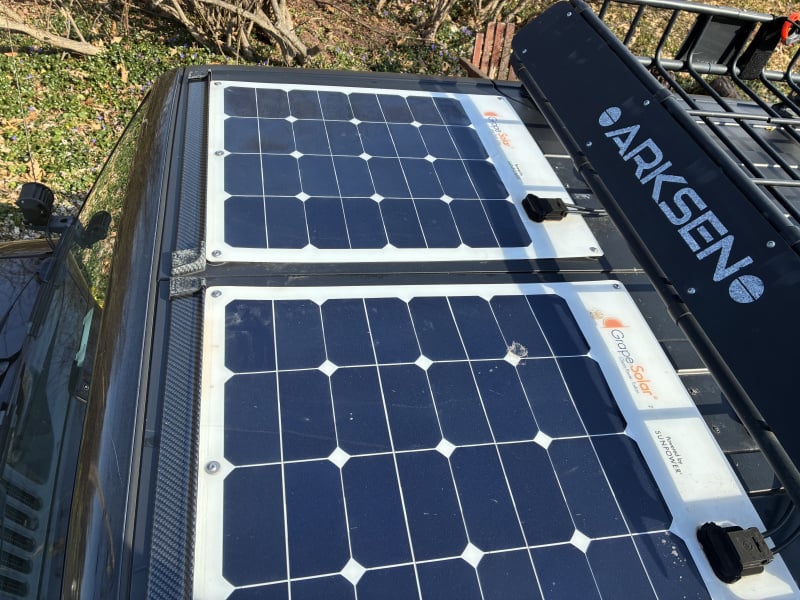
The 100W's of solar on the roof of our Wrangler falls short for the 200Ah's of battery, but should extend the charge some. I now have the power station in the Jeep running our 12V freezer to test how long it will last.Stockton, New Jersey
2020 nuCamp T@B 320S * Jeep Wrangler
60,865 camping miles through the end of 20250 -
I let the freezer (set to 10 degrees) run for a week in the back of the Jeep. Not great sun this time of year, with a couple of rainy days. The highest yielding day from the 100W's of solar was 310Wh with an average about 200Wh per day. Expecting better when we get back on the road later in the year. The freezer was empty, so not too efficient, but even running as a freezer, I don't expect it to use more than 400Wh per day during summer heat.
So, even at a potential 200Wh deficit per day this power station should give us close to two weeks (hopefully more) before needing to recharge. Not too bad.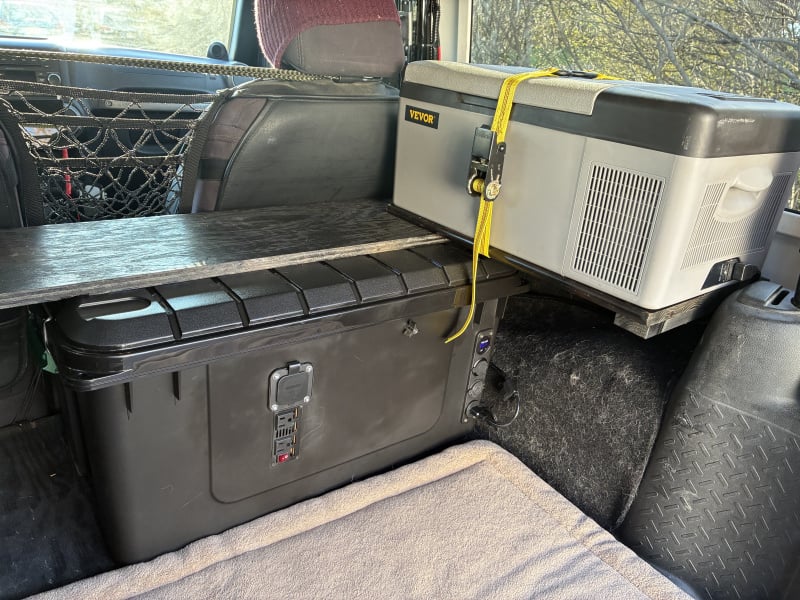
Stockton, New Jersey
2020 nuCamp T@B 320S * Jeep Wrangler
60,865 camping miles through the end of 20253 -
I did a similar but much lazier version of this. I upgraded our 100ah Battleborn to a 230ah LiTime. I purchased a trolling motor battery box for the Battleborn that has a 12v plug and USB A and C inputs. I only use this battery to run the 12v fridge so no inverter needed. I haven't bothered with a portable solar panel as of yet. Our truck has a 400 watt inverter, so I use a 5 amp lithium charger while driving to charge the battery.2015 Max S Outback | 2010 Xterra -- Retired
2022 Ford F350 Tremor | 2022 Cirrus 6202 -
We.ve been carrying a compressor cooler for many years and used a small lunch box size "solar generator" to keep it going in the TV when overnighting. I would recharge it generally from the inverter outlet in the TV while traveling. Usually while traveling we didn't worry about powering the cooler during stops.
When I installed the 200 AH lithium batteries in the trailer I found it more convenient and reliable to plug the cooler into the 12 volt SAE connection in the trailers tongue box when overnighting. After a bit of thought, I decided to just leave the cooler plugged into the trailer all the time. Now it's powered 100% of the time no longer dependent on the TV running and it remains connected to and left with the trailer once settled at a campsite. The trailer batteries are kept charged by 267 watts of roof solar along with a TV powered DC to DC charger while traveling and the trailers converter once on shore power.
I guess my trailer became my power station - at least for our compressor cooler... 1
1 -
We've followed some similar methods for powering a 12V chest fridge. Our old Wrangler doesn't have an inverter or a DC-DC charger, but while driving I'd plug into a cigarette port in the tow vehicle. Like you, we now have plenty of solar and battery capacity in the T@B. For a while, I was running a wire from a port on the trailer's tongue box into our Jeep. Once setup, we'd keep the freezer outside the trailer so that we could take day trips. The part I didn't like was having to move the chest around. That included putting it inside the door of our 320 when away from the campsite or back into the Jeep at night time because of critter worries.rfuss928 said:I guess my trailer became my power station - at least for our compressor cooler...
With this new setup, the plan is to leave the cooler in the Jeep all the time. Since it's used as a freezer, we don't need to access it too often. An additional benefit is having ice for drinks when away from the campsite on day trips. If I hadn't already had most of what I needed for the project, I probably would have stuck with what you're doing, but have high hopes that it will serve us well.Stockton, New Jersey
2020 nuCamp T@B 320S * Jeep Wrangler
60,865 camping miles through the end of 20251 -
Update.
I found a better use for the NOCO as part of a battery backup system at home, so went to a Victron 15 amp IP22 for the power station. Also, where the power station is situated in our Jeep it made accessing the extra space in the box challenging. I cut a window in the front of the box for storing electrical accessories.
Heading to Canada at the end of next week. This system will be put to the test on the Newfoundland and Labrador portion of the trip.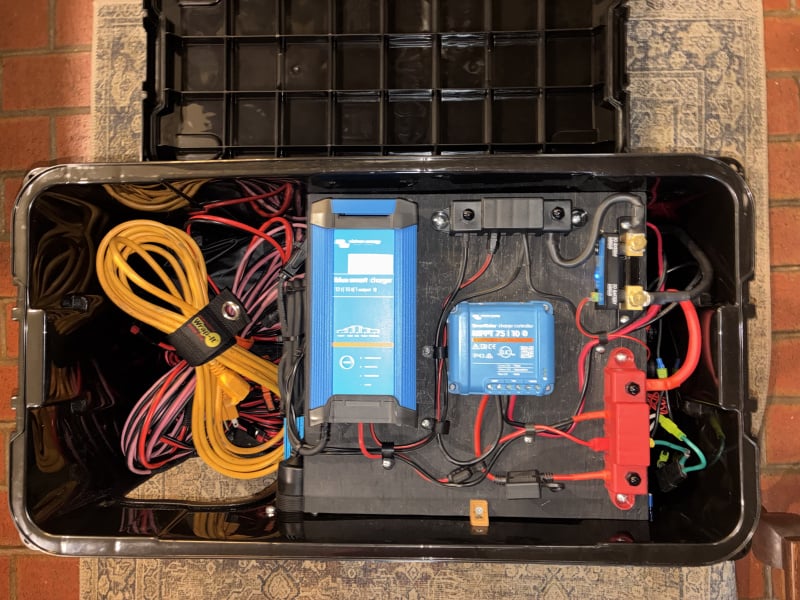
Stockton, New Jersey
2020 nuCamp T@B 320S * Jeep Wrangler
60,865 camping miles through the end of 20252

 https://www.youtube.com/watch?v=WFLYIlCwE6w
 2017 Outback
Categories
- All Categories
- 11 Cirrus Truck Campers
- 128 Dutchman and Vintage TaB Archives
- 3 Forum Rules
- 3 nüCamp & Forum Contacts
- 969 Air Conditioning & Refrigeration
- 2.7K Battery/Electrical & Solar
- 1.2K Camping & Travel
- 145 Events & News
- 220 Factory Comments
- 25 "FOR SALE" - New/Used Trailers
- 14 “FOR SALE" - Camping & Trailer Gear
- 2.4K Heating/Plumbing & Winterizing
- 138 Help - Computer & System
- 925 Introductions
- 408 Looking to purchase a trailer?
- 2.2K Modifications & Upgrades
- 1.4K Products and Accessories
- 421 Service/Maintenance & Recall Notices
- 37 Solo Travelers Hints & Tips
- 1 T@G Forum
- 78 Teardrop Groups & Links
- 78 Testimonials
- 922 Tips & Tricks
- 1.5K Trailer & Towing
- 27 Owners Manuals/PDF Files/Videos & Resources
- 56 üCamp Rally - News & Information