



2014 S Maxx
2011 Tacoma 4cyl ... edit: 2022 Tacoma 6cyl - oh yeah!

A_Little_T@b'll_Do_Ya
I am wondering how much antifreeze the system will hold?Captenaj said:A lot a great information here! I am going to try the belts and suspenders method, meaning blow out the lines then add antifreeze. Why? Because I don't trust either method completely. Thanks for all the help.

@Doug, in the 320 winterization instructions that I created I list disconnecting both sides of the pump and the option of running the pump dry. I would think if anything much was left in that line the pump would pick it up. Also, with the tongue up, I suspect gravity will help clear the line.DougH said:A question for hydrodynamic experts. I've added heating to everything in the basement, but in the pic below the yellow arrow points to the intake line that goes from the fresh water tank up to the water pump.
When you drain the fresh water tank during winterization, the garden hose fill line, the drain tube line, and the tank are emptied. There's no way to blow these out with much pressure, but there's no need.
However, that line up to the water pump won't necessarily release its water if the water pump makes a good seal at the left connection to the ShureFlo pump. So it could possibly freeze.
You could disconnect the intake tube from the water pump and let it drain, or even use pressure to blow it out after draining the tank, and while the fresh water drain valve is still open.
But I don't normally hear that discussed during the blowout method winterization, or in the PDFs so far.
Should it be?
In the early days of many T@Bs, some bits of foam insulation in the fresh tank is picked up and we have to clean out the filter and then blow air down the intake line to clear it. I had to do that a few times in the first six months of use. This would be the same action... but as part of the blowout winterization process.
Even those who use a secondary valve to pull RV antifreeze into all the lines instead of from the fresh tank, may not be servicing this intake line to the water pump.
Or am I fretting about nothing, and when draining the fresh tank, the water pump is not so well sealed that the intake line will also drain. We could just unhook the line from the water pump whenever draining the fresh tank, and that would likely let gravity do enough.
What do the experts think?
2021 T@b 320 Boondock "Mattie Ross" | 2021 T@b Nights: 239 | Total nights in a T@b 455 | 2022 Jeep Grand Cherokee L Overland | T@b owner since 2014


 Thanks for the comments!
@DougH, I may not be an expert, but I'd bet more than a few nickels that once you have drained the FW tank any residual water in the line to the pump is also going to run back out and out the drain. Even if the pump could keep all that water suctioned into the line, running the pump for a few seconds would clear it out.DougH said:...
Or am I fretting about nothing, and when draining the fresh tank, the water pump is not so well sealed that the intake line will also drain. We could just unhook the line from the water pump whenever draining the fresh tank, and that would likely let gravity do enough.
...
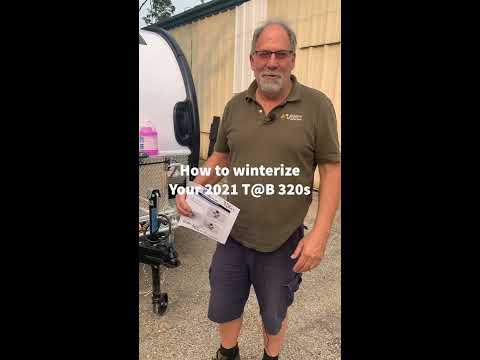 https://www.youtube.com/watch?v=CRjhpGmm5oY
I think vodka's a great idea. No de-winterizing needed, just tap it off when you start your first camp of the season! ;-)DougH said:
I dont know about that. The antifreeze recommended is without alcohol to protect fittings.ScottG said:
Good point. That's why I stick with the blowout method for winterizing and leave the vodka in the bottle where I can apply it directly to my own fittings...Tabnero said:
<br><br>https://www.youtube.com/watch?v=CRjhpGmm5oY<br><br> <br>What the video doesn't show is initially when blowing out the water lines with compressed air, the Heater bypass valve is in normal mode. When filling the water lines with antifreeze, the Heater bypass valve is in "Bypass" to keep antifreeze out of the Alde water tank.<br>

